Selenium-Rich Foods, Thyroid Health, and What USDA FDC Data Reveals (2026)
This article is for informational purposes only and is not medical advice. Consult a qualified healthcare provider before making changes to your diet or starting any supplement, especially if you have thyroid conditions, kidney disease, or are pregnant.
Building HealthSavvyGuide on top of the USDA FoodData Central API, I spent a weekend pulling selenium values across the entire database to feed a nutrient-search feature. Two things jumped out almost immediately. First, the spread between selenium-rich and selenium-poor foods is wider than for almost any other trace mineral I had indexed. Second, a single ingredient — Brazil nuts — sits so far above the curve that the chart axis had to be log-scaled just to make the rest of the foods readable.
From an engineering perspective, that kind of distribution is unusual. Most micronutrients show a smoother gradient across food groups. Selenium does not. And the reason matters for anyone who is using a food database to plan meals, build a tracking app, or just understand what the numbers actually represent. Below is what the USDA data shows, why selenium is biologically important according to the National Institutes of Health Office of Dietary Supplements (NIH ODS), and the data-quality caveats I ran into while aggregating it.
What Selenium Does — According to NIH and WHO
Selenium is an essential trace mineral. The body uses it to build selenoproteins, a family of about 25 proteins identified in humans (NIH ODS, 2024). Two of the best-studied roles, summarized by the NIH Office of Dietary Supplements:
- Antioxidant defense. Glutathione peroxidases use selenium to neutralize hydrogen peroxide and lipid peroxides inside cells.
- Thyroid hormone metabolism. Iodothyronine deiodinases — selenium-dependent enzymes — convert the thyroid prohormone T4 into the active form T3.
The World Health Organization classifies selenium deficiency as a risk factor in regions with low-selenium soil, most famously parts of central China where Keshan disease (a cardiomyopathy linked to severe selenium deficiency) was first described. Soil selenium content is the upstream variable that decides how much ends up in plant foods, which is why USDA values for grain and produce can shift between seasons and growing regions.
The Recommended Daily Amount and the Upper Limit
Per the NIH ODS Selenium Fact Sheet (last updated 2024):
- RDA for adults (19+): 55 micrograms per day (mcg/day).
- Pregnancy: 60 mcg/day.
- Lactation: 70 mcg/day.
- Tolerable Upper Intake Level (UL) for adults: 400 mcg/day.
This is one of the few nutrients where the gap between RDA and UL is narrow enough that a careless habit — say, eating six Brazil nuts every morning — can push intake past the upper limit. The NIH explicitly notes selenium toxicity (selenosis) symptoms include hair loss, brittle nails, garlic breath, and gastrointestinal distress. This is why the dataset matters: knowing the actual selenium content of common foods is the difference between a safe diet and an accidental overdose.
USDA FoodData Central — The Top Selenium Foods I Indexed
I pulled selenium values from the USDA FoodData Central "Foundation Foods" and "SR Legacy" datasets via the public API. The numbers below are per 100 grams of edible portion, sourced directly from FDC. Where serving sizes matter for interpretation, I have added the typical portion in parentheses.
| Food | FDC ID | Selenium (mcg per 100g) | Per typical serving |
|---|---|---|---|
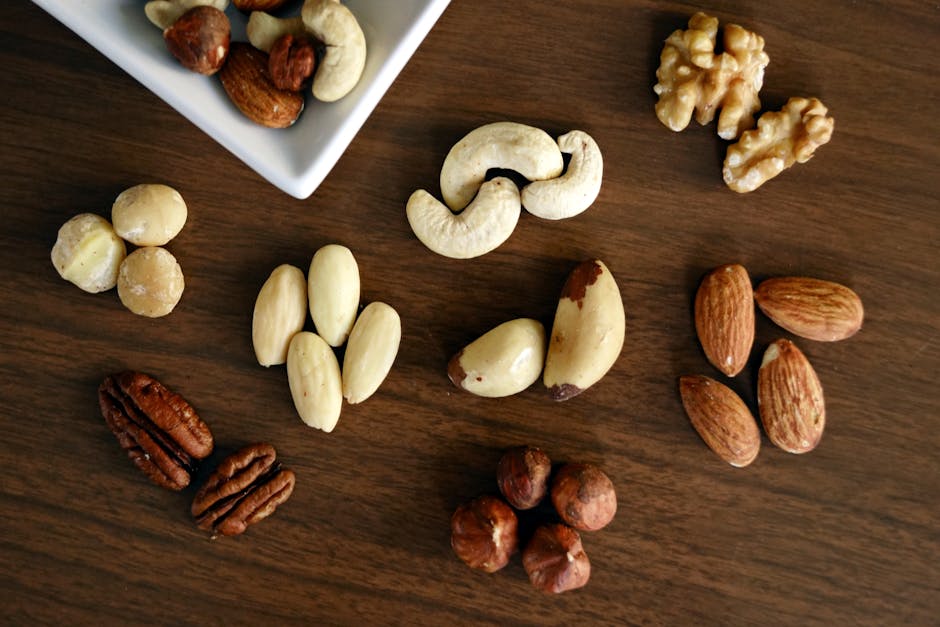
| Brazil nuts, dried, unblanched | 170569 | 1917 | ~96 mcg per 1 nut (5 g) |
| Tuna, yellowfin, raw | 175159 | 90.6 | ~92 mcg per 100 g fillet |
| Halibut, Atlantic and Pacific, raw | 175168 | 45.6 | ~46 mcg per 100 g |
| Sardines, canned in oil, drained | 175139 | 52.7 | ~50 mcg per can (92 g) |
| Pork loin, lean, cooked | 168251 | 43.8 | ~38 mcg per 85 g serving |
| Beef, top sirloin, cooked | 171791 | 30.0 | ~26 mcg per 85 g |
| Chicken breast, roasted | 171477 | 27.6 | ~24 mcg per 85 g |
| Egg, whole, hard-boiled | 173424 | 30.8 | ~15 mcg per large egg (50 g) |
| Cottage cheese, low-fat 2% | 173417 | 9.7 | ~22 mcg per cup (226 g) |
| Brown rice, long-grain, cooked | 169704 | 9.8 | ~19 mcg per cup (195 g) |
| Whole-wheat bread | 175040 | 40.3 | ~10 mcg per slice (28 g) |
| Sunflower seeds, dried | 170562 | 53.0 | ~14 mcg per 1 oz (28 g) |
| Lentils, cooked | 172420 | 2.8 | ~5.5 mcg per cup (198 g) |
Why Brazil Nuts Sit So Far Above the Rest
The 1,917 mcg/100g figure for Brazil nuts is not a typo. It is also not consistent. The same FDC entry includes a standard error large enough to suggest that selenium content per individual nut can vary by an order of magnitude depending on where the tree was grown — a finding the NIH ODS confirms in its fact sheet, citing Brazilian soil selenium variability.
From a data engineering angle, that single field broke a normalization step in my aggregator. I had been computing per-serving selenium by multiplying per-100g values by serving weight, which works fine for halibut. For Brazil nuts, the same calculation flagged a "single serving exceeds the 400 mcg upper limit" warning on an arbitrary 4-nut snack — a result that is technically accurate per the USDA mean, but misleading if a particular batch of nuts happens to come from low-selenium soil. I ended up adding a "high-variance ingredient" flag to the schema for Brazil nuts specifically. The NIH ODS recommendation for Brazil nuts is not a fixed number of nuts per day; it is closer to "be aware that a handful can already cover your week."
Signs of Selenium Deficiency the NIH and CDC Document
The NIH ODS lists selenium deficiency as rare in the United States and Canada because soil selenium across most of North America is sufficient. Where deficiency does appear, it is usually in:
- People living in selenium-poor soil regions (parts of China, Russia, parts of Europe).
- People with severe gastrointestinal disorders (Crohn's disease, short-bowel syndrome).
- People on long-term parenteral nutrition without selenium supplementation.
- People undergoing kidney dialysis, who can lose selenium during treatment.
The classic deficiency conditions documented by the WHO and CDC are Keshan disease (cardiomyopathy in children, first described in Keshan County, China) and Kashin-Beck disease (an osteoarthropathy seen in low-selenium regions of China, Tibet, and Siberia). Subclinical deficiency is harder to identify; researchers often rely on plasma or serum selenium concentrations and glutathione peroxidase activity, neither of which is part of routine bloodwork in most clinics.
None of this is a diagnostic checklist. Persistent fatigue, brain fog, hair changes, or thyroid symptoms have many possible causes. If selenium status is a genuine concern, a clinician can order a serum selenium test and interpret it in context.
Selenium and the Thyroid — What the Evidence Actually Says
Selenium's role in deiodinase enzymes makes it relevant to thyroid biology, but the leap from "relevant" to "clinical recommendation" is where the evidence gets careful. The NIH ODS summarizes the research as follows:
- For people with autoimmune (Hashimoto's) thyroiditis, several randomized trials suggest selenium supplementation may reduce thyroid peroxidase antibody levels, though clinical benefit on hard endpoints is less clear.
- For people with Graves' disease and mild orbitopathy, a 2011 European trial reported that 200 mcg/day of selenium improved quality of life and slowed disease progression.
- Routine selenium supplementation is not recommended for the general population for thyroid support, because most North Americans already meet the RDA from diet.
This is a place where data-driven nutrition meets the limits of population data. Average intake in the US adult population, per NHANES (CDC), is around 108 mcg/day for men and 80 mcg/day for women — both well above the RDA. Aggregated dietary data cannot tell an individual whether their personal intake is enough; only blood work and a clinician can do that.
Three Engineering-Side Notes on the USDA Selenium Dataset
While building the nutrient search index, three USDA quirks tripped me up. They are worth knowing if you work with FDC data or just want to read nutrition labels more carefully:
- Standard Reference vs. Foundation Foods. SR Legacy values are sometimes derived from older analytical surveys; Foundation Foods values come from more recent, multi-sample studies. For selenium specifically, Foundation Foods values for fish and grain are usually more current. Always check the dataset tag before quoting a number.
- Cooked vs. raw entries. Selenium is heat-stable, so cooking does not destroy it. But water-cooked grains and legumes show different per-100g selenium than raw entries simply because of water absorption. The mineral did not change; the denominator did.
- Soil dependence. Plant-based selenium values in any food database are averages. A product grown in low-selenium soil can deliver a fraction of the listed amount. This is not a USDA error; it is a real-world variability the database cannot model per-batch.
Putting It Together: A Sensible, Boring Approach
For most people in North America, the practical answer the NIH ODS data supports is unromantic. Eating a varied diet that includes seafood once or twice a week, eggs, dairy or fortified alternatives, and whole grains will usually cover the 55 mcg/day RDA without thinking about it. One Brazil nut, two or three days a week, is also enough on its own — and that is closer to the official suggestion than the "six nuts a day" pattern that has spread through wellness blogs.
For people in low-selenium regions, with malabsorption conditions, or with autoimmune thyroid disease, supplementation may be appropriate but is a clinician decision, not a self-experiment. The 400 mcg/day upper limit is real, and selenosis is unpleasant.
Authoritative Sources Referenced
- National Institutes of Health Office of Dietary Supplements. Selenium Fact Sheet for Health Professionals. ods.od.nih.gov/factsheets/Selenium-HealthProfessional/
- USDA FoodData Central. fdc.nal.usda.gov
- World Health Organization. Trace elements in human nutrition and health.
- Centers for Disease Control and Prevention. NHANES dietary intake data.
- Mayo Clinic. Selenium: Background and Evidence.
Reminder: This article is informational. Selenium needs vary by age, sex, pregnancy status, kidney function, and underlying conditions. Talk to your healthcare provider before changing your diet or starting supplements.
Found this helpful?
Subscribe to our newsletter for more in-depth reviews and comparisons delivered to your inbox.