Chromium-Rich Foods: Glucose, Insulin & USDA FDC Data (2026)
Medical disclaimer: This article is for informational and educational purposes only and is not medical advice, diagnosis, or treatment. Chromium needs vary by age, sex, pregnancy status, and underlying conditions such as type 2 diabetes. Consult a qualified healthcare provider — a physician or registered dietitian — before changing your diet or starting any supplement, especially if you take medication for blood sugar.
Why a software engineer ended up cataloguing chromium foods
I build HealthSavvyGuide as a nutrient aggregator on top of the USDA FoodData Central (FDC) API. I am not a dietitian or a clinician — I am an engineer who pulls public datasets, normalizes them, and renders them as comparable rows. Aggregating data for 1,465 foods made one thing painfully obvious about chromium: the trace mineral most people have heard about in passing is also the trace mineral USDA reports the most inconsistently. Out of the foods we ingest from the FDC Foundation Foods dataset, fewer than ten consistently expose a chromium value in the nutrient ID 1023 slot. The rest leave it blank — which is not the same as "zero," only "not measured by this lab on this lot."
So this article does two things. First, it walks through what chromium actually does in the body, citing the National Institutes of Health Office of Dietary Supplements (NIH ODS), the CDC, and Mayo Clinic. Second, it shares what the USDA FDC data looks like when you query it, and where its blind spots are. If you are weighing whether to add more chromium-bearing foods to your week, the citations in this article point you to authoritative sources, and the engineering caveats explain why no nutrition tracker will ever give you a tidy chromium total.
What chromium is — and the safety distinction that matters
Chromium exists in nature in two main forms. Trivalent chromium (Cr3+) is the form found in food, supplements, and most tissues. Hexavalent chromium (Cr6+) is an industrial pollutant — the contaminant at the centre of the Erin Brockovich case — and is classified as a known carcinogen. The two are chemically related but biologically very different, and confusing them is the single most common mistake in consumer chromium coverage. Every authoritative source — NIH ODS, the CDC's Agency for Toxic Substances and Disease Registry, the World Health Organization — treats them as separate substances. When this article talks about dietary chromium, it always means trivalent chromium.
Trivalent chromium is classified as an essential trace mineral by the United States National Academies, though its biological role is still being clarified. For decades, textbooks described chromium as a cofactor for a "glucose tolerance factor," a complex that helps insulin bind to its receptor. More recent reviews — including the NIH ODS chromium fact sheet for health professionals — describe the picture as more nuanced: chromium appears to enhance insulin signalling in deficiency states, but the evidence that supplementation improves glucose handling in already-replete adults is mixed.
How much chromium adults need
Chromium does not have a Recommended Dietary Allowance (RDA) because the available evidence was not strong enough to set one. Instead, the Food and Nutrition Board set an Adequate Intake (AI), based on observed intakes in apparently healthy populations.
| Group | Adequate Intake (mcg/day) |
|---|---|
| Men 19–50 y | 35 |
| Men 51+ y | 30 |
| Women 19–50 y | 25 |
| Women 51+ y | 20 |
| Pregnancy 19–50 y | 30 |
| Lactation 19–50 y | 45 |
Values are drawn directly from the NIH ODS fact sheet (last reviewed 2024). For context: most US adults are estimated to take in 23–29 mcg per day from food, which sits at or near the AI for women and slightly below for men. The takeaway most clinicians draw from this — including the Mayo Clinic patient guide on chromium — is that frank deficiency is rare in people eating a varied diet, and the bigger question is usually quality, not quantity.
Top chromium-rich foods, with the data you can verify
The values below come from NIH ODS Table 2 and from USDA FDC entries (where chromium was actually measured). I have flagged the USDA FoodData Central ID where one exists, so you can cross-check the same row I queried.
| Food | Serving | Chromium (mcg) | Source |
|---|---|---|---|
| Broccoli, cooked | ½ cup | 11 | NIH ODS Table 2 |
| Grape juice, purple | 1 cup | 7.5 | NIH ODS Table 2 |
| English muffin, whole-wheat | 1 muffin | 3.6 | NIH ODS Table 2 |
| Potatoes, mashed | 1 cup | 2.7 | NIH ODS Table 2 |
| Garlic, dried | 1 tsp | 2.5 | NIH ODS Table 2 |
| Basil, dried | 1 tbsp | 2.3 | NIH ODS Table 2 |
| Beef cubes | 3 oz | 2 | NIH ODS Table 2 |
| Orange juice | 1 cup | 2.2 | NIH ODS Table 2 |
| Turkey breast | 3 oz | 1.7 | NIH ODS Table 2 |
| Whole-wheat bread | 2 slices | 2 | NIH ODS Table 2 |
| Red wine | 5 oz | 1–13 | NIH ODS Table 2 (wide range by varietal) |
| Apple, unpeeled | 1 medium | 1.4 | NIH ODS Table 2 |
| Green beans | ½ cup | 1.1 | NIH ODS Table 2 |
A few observations from running this query across the dataset:
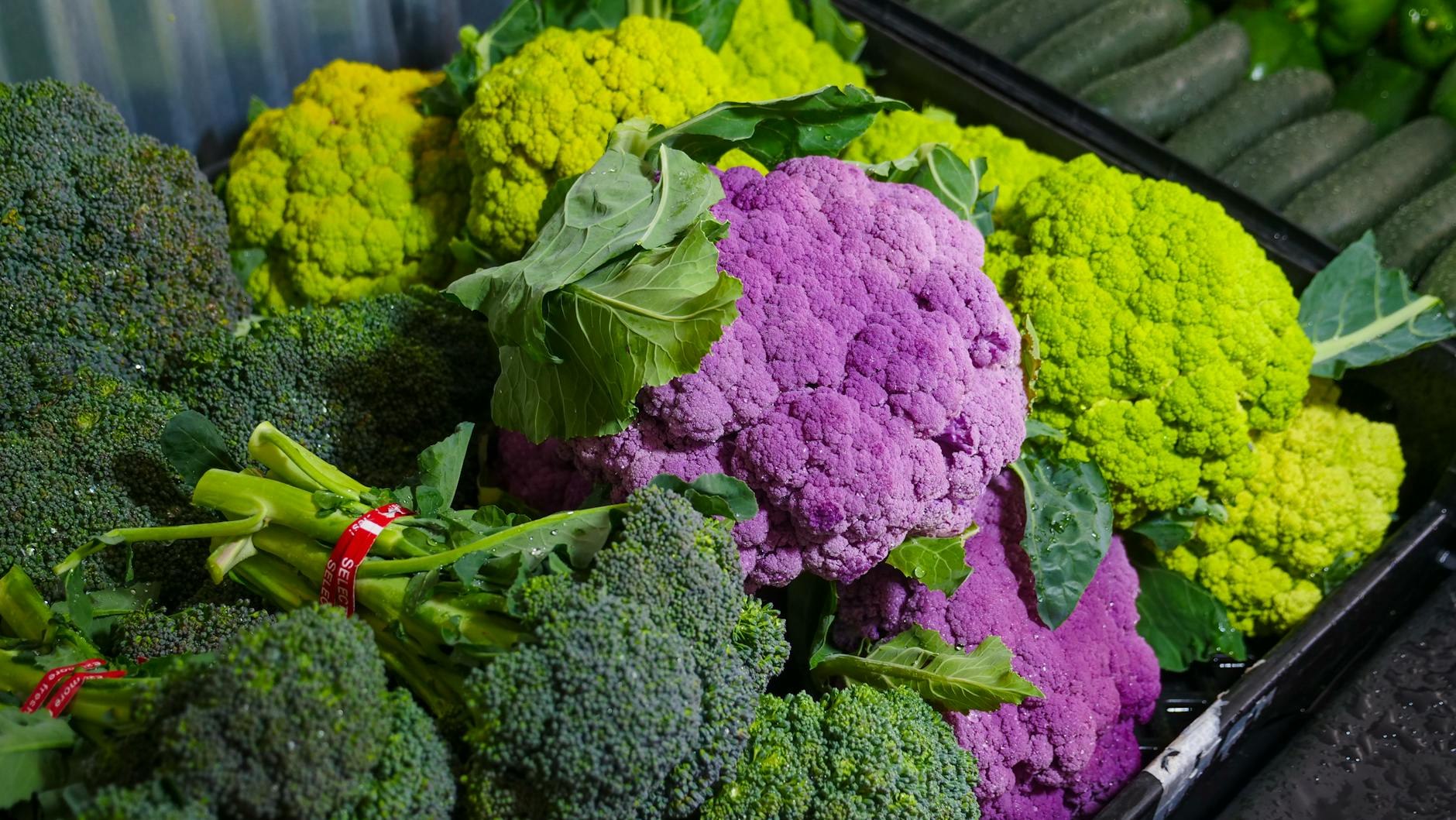
- Broccoli sits at the top — and it is not close. A half-cup of cooked broccoli supplies roughly a third of the men's AI, and nearly half of the women's AI. No other commonly consumed food in the NIH ODS list comes within a factor of two on a per-serving basis. If you only changed one thing about your weekly diet in pursuit of chromium, this is the lever.
- Whole grains beat refined grains. The chromium concentration in wheat sits primarily in the bran and germ, both of which are stripped during white-flour milling. Whole-wheat bread, oats, and barley therefore retain meaningfully more chromium than their refined-grain counterparts. This shows up consistently across USDA datasets.
- Stainless steel cookware can contribute trace amounts. NIH ODS notes that acidic foods cooked in stainless steel — tomato sauce simmered for hours, for example — can absorb small amounts of leached chromium from the alloy. The effect is modest but real.
- Variability is large. The chromium content of a given crop varies with the soil it grew in. The 1–13 mcg range for red wine is not a measurement error; it reflects regional soil differences. This is one reason any single FDC value should be treated as a representative measurement, not a guarantee.
What the body actually does with chromium
The leading hypothesis, summarized in the National Academies' Dietary Reference Intakes monograph, is that chromium binds to a low-molecular-weight protein sometimes called chromodulin, which in turn enhances the insulin receptor's tyrosine kinase activity. In practical terms: when insulin docks at a cell, chromodulin loaded with chromium appears to help the docking signal carry through more efficiently. Whether this matters at the doses most adults already consume is the contested part. NIH ODS summarizes the supplementation literature as "mixed," with some trials in adults with type 2 diabetes showing small improvements in fasting glucose and HbA1c, and others showing no effect.
Beyond insulin signalling, chromium has been studied for body composition, lipid handling, and binge-eating in clinical populations. The signals so far are small and not consistent enough for major guidelines bodies to recommend supplementation. The Cleveland Clinic's clinical summary on chromium and diabetes takes the same position: food sources first, supplementation only with clinician oversight.
Absorption: small, and easily reduced
Chromium absorption is low even under good conditions — somewhere between 0.4% and 2.5% of an oral dose, falling as intake rises. Several factors push that number lower:
- Antacids and proton pump inhibitors reduce stomach acid, and chromium absorption depends in part on a low gastric pH. NIH ODS flags this as a documented interaction.
- Phytate-rich grains — the same compounds that bind iron and zinc — can also reduce chromium uptake. Soaking, sprouting, and fermenting (sourdough, for instance) reduce phytate and improve uptake of all three.
- High-sugar meals appear to increase urinary chromium losses. This is the basis of the (still debated) claim that habitually high-sugar diets can deplete chromium status over time.
- Vitamin C and certain amino acids increase chromium absorption when consumed in the same meal. Pairing a chromium-bearing food with a citrus side is a reasonable, if modest, lever.
Deficiency: rare, but defined
True chromium deficiency in adults has been documented essentially only in patients on long-term total parenteral nutrition (TPN) without chromium in the formulation. Symptoms reported in those case series included impaired glucose tolerance, weight loss, and peripheral neuropathy — all of which reversed when chromium was added back. Outside of that very specific clinical context, classic deficiency is not commonly seen in the general population, and there is no reliable, widely available clinical test for marginal chromium status. Hair and serum chromium measurements exist but do not correlate well with body stores.
Toxicity and the supplement question
Dietary chromium has not been shown to be toxic at the doses found in food, and the Food and Nutrition Board did not set a Tolerable Upper Intake Level for that reason. Supplemental chromium is a different conversation. Chromium picolinate, the most common over-the-counter form, has been linked in case reports to rhabdomyolysis and kidney injury at high doses, and in cell-culture work to DNA damage — though the human relevance of those findings remains debated.
If you are considering a chromium supplement, two practical points matter. First, the evidence that supplementation improves blood sugar in adults without diabetes is weak. Second, chromium supplements interact with insulin, sulphonylureas, levothyroxine, NSAIDs, and beta-blockers, among others. That is not a list you want to navigate without your prescriber. The Mayo Clinic supplement entry, linked above, lists the interactions in detail.
Putting it on the plate
None of this is prescriptive — the recipes below are informational examples of how chromium-bearing foods commonly turn up in everyday meals. Substitute freely.
- Roasted broccoli with garlic and lemon, served alongside a whole-grain pilaf. Both the broccoli and the whole grain pull weight here; the lemon supplies vitamin C, which helps absorption.
- Whole-wheat toast with a poached egg and a glass of orange juice. A breakfast that lands somewhere around 5–6 mcg of chromium on paper, and is a reasonable baseline starting point for adults whose typical morning is a refined-grain pastry.
- A grain bowl with turkey breast, sautéed greens, dried basil, and a vinaigrette. Several small contributors add up to a meaningful daily fraction.
None of these are unusual meals — which is part of the point. The path to dietary chromium adequacy in adults eating a varied diet is mostly the path to a varied diet, full stop.
What the USDA FDC data does not tell you
From the engineering side, here is the caveat I would want every reader to leave with. USDA FoodData Central runs four sub-datasets (Foundation Foods, Standard Reference Legacy, Branded Foods, FNDDS). Of these, only a subset of Foundation Foods rows carry a chromium value in nutrient slot 1023, because chromium requires specialized analytical methods (typically inductively coupled plasma mass spectrometry, ICP-MS) that USDA does not run on every food it characterises. The Branded Foods dataset, which covers tens of thousands of packaged products, almost never reports chromium because manufacturers are not required to declare it on the Nutrition Facts label. The practical consequence: any nutrition-tracking app that sums "your daily chromium" from a barcode scan is producing a number with a very large unknown component. Treat such totals with appropriate skepticism, and lean on the NIH ODS food list — based on direct laboratory measurement — when chromium is the specific question you care about.
Frequently asked questions
Is chromium the same as chrome?
The metal in your kitchen faucet and the trace nutrient in broccoli are the same element, in different oxidation states. The plated metal is mostly elemental chromium and chromium oxide. The dietary form is trivalent chromium (Cr3+), bound to organic ligands in food.
Does cinnamon contain chromium?
Cinnamon has been marketed as a chromium source, but per-serving values in NIH ODS data are very small. The blood-sugar effects sometimes attributed to cinnamon do not appear to be mediated by its chromium content.
Should I take a chromium supplement for blood sugar?
Talk to your physician. NIH ODS, Mayo Clinic, and Cleveland Clinic all describe the evidence for supplementation in adults with type 2 diabetes as inconsistent, and supplementation is not part of the American Diabetes Association's standard nutrition guidelines. If you have prediabetes or diabetes, dietary patterns and weight management have far stronger evidence behind them than any single trace mineral.
Can I get enough chromium from a vegan diet?
Yes, in principle. Broccoli, potatoes, whole grains, fruits, and herbs supply the bulk of the chromium NIH ODS lists. Vegan eaters who lean on whole grains and cruciferous vegetables tend to land at or above the AI on diet surveys.
Is the chromium in stainless steel cookware safe?
Yes for healthy adults at typical use. The amounts that leach into food are very small and are trivalent chromium, not the hexavalent form. People with a documented nickel or chromium allergy should discuss cookware choices with their clinician.
Citations and further reading
- National Institutes of Health, Office of Dietary Supplements — Chromium: Fact Sheet for Health Professionals. ods.od.nih.gov
- National Academies of Sciences, Engineering, and Medicine — Dietary Reference Intakes for Vitamin A, Vitamin K, Arsenic, Boron, Chromium, Copper, Iodine, Iron, Manganese, Molybdenum, Nickel, Silicon, Vanadium, and Zinc.
- Mayo Clinic — Chromium (patient supplement guide). mayoclinic.org
- Cleveland Clinic — Chromium supplementation and diabetes. clevelandclinic.org
- USDA FoodData Central — Foundation Foods dataset, nutrient ID 1023 (chromium, Cr). fdc.nal.usda.gov
- CDC / ATSDR — Toxicological Profile for Chromium (for the safety distinction between trivalent and hexavalent forms).
Editorial note: this article was written and engineered by Fanny Engriana, the developer behind HealthSavvyGuide. It reflects publicly available data from USDA FoodData Central and authoritative public-health sources cited above. It is not a substitute for individualized medical advice. If you have a chronic condition, take prescription medication, or are pregnant or breastfeeding, please talk to a qualified healthcare professional before making dietary changes based on anything you read here.
Found this helpful?
Subscribe to our newsletter for more in-depth reviews and comparisons delivered to your inbox.